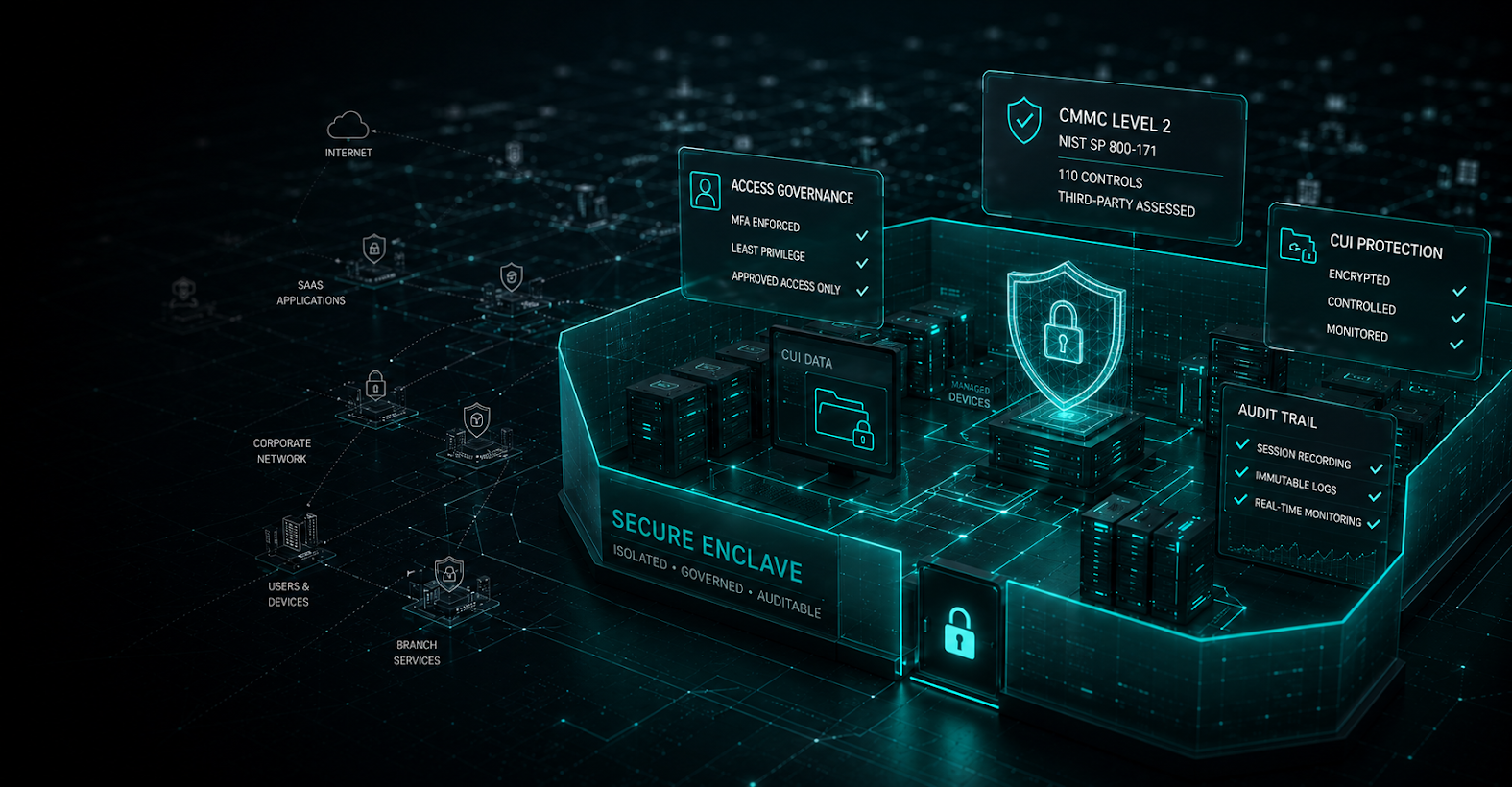
Why You Should Move to Tehama Technologies Today





Reducing Cost, Adding Flexibility, and Driving Innovation in Hybrid and Remote Work
In the business world, organizations are constantly re-prioritizing and adapting to meet changing competitive pressures. Innovation and effectively leveraging technology are critical to their ability to adapt quickly. The pivot towards remote and hybrid work models means businesses today expect their technology partners to provide robust security solutions, immediate ROI and cost savings, greater flexibility, and an optimized user experience.
Where does your organization stand on its virtualization and digital workspace deployments? The Tehama Cybersecurity Platform for Hybrid and Remote Work, powered by our P5 architecture, provides all these things and more in a way that traditional virtualization and digital workspace solutions cannot.
Barriers to success
Businesses are reconsidering the investments they have made in their existing virtualization and cloud workspace solutions for the following reasons:
- Cost. Over-provisioning or under-provisioning due to lack of licensing flexibility, vendor lock-in, and the need for ongoing maintenance and upgrades can quickly add to the bottom line, making existing virtualization solutions cost-prohibitive, impeding broad adoption, and negatively impacting a business’ competitive advantage.
- Zero Flexibility. As a cloud-native platform, Tehama enables organizations to move workloads to any combination of infrastructure inclusive of hybrid, multi-cloud, on-premise, or a combination; enabling much greater flexibility to choose infrastructure options.
- Complexity. Difficult to implement and manage, existing virtualization solutions require specialized knowledge, skills, and engineering. They are a barrier to entry for organizations looking to monetize their virtualization and digital workspace strategies immediately.
- Vendor uncertainty. The market is witnessing an explosion of M&A activity with existing virtualization providers merging, being acquired, or changing their delivery models. This represents risk, rising costs, and less innovation as resources are consolidated or eliminated.
How Tehama delivers
Tehama is built on these simple truths:
- We are cloud-native.
- We understand the modern workplace and that business priorities are changing fast.
- We deliver immediate ROI and cost savings and eliminate barriers to entry and adoption.
- We empower businesses to focus on their core operations while we automate the secure delivery of hybrid and remote work.
With Tehama, your organization benefits from the following:
-
Immediate cost savings.
Tehama eliminates the need for new investments and the associated costs of maintaining, upgrading, and operating on-premises infrastructure. Supported by the market’s most flexible licensing models, it easily integrates within existing technology ecosystems, eliminating operational overhead and idle tech capacity.
-
Flexibility.
Tehama gives businesses the flexibility to move workloads to any combination of infrastructure inclusive of on-premises and cloud solutions.
-
Simplicity and scale.
Operational on day one, Tehama rapidly scales up or down as business needs and requirements change. This prevents over-provisioning and underutilization, making it an excellent choice for modern business environments.
-
Migrations made easy.
Centralized management, automated provisioning, and updates, combined with cross-platform, multi-cloud support for Windows and Linux saves significant time and effort on cloud migrations and reduces strain on IT resources.
-
Seamless and secure.
Enterprise-grade, policy-based security controls keep data and intellectual property safe from breach or theft, without slowing productivity.
-
Less risk.
Secure end-to-end access to data and applications built on the Zero-Trust framework accelerates the business’s journey to SASE.
-
Non-intrusive compliance.
Tehamas’s integrated, multi-tiered security protocols meet the most stringent security standards, enabling businesses to achieve regulatory compliance while promoting seamless collaboration.
The role of the Power of Five in navigating hybrid and remote work
The Tehama Cybersecurity Platform for Hybrid and Remote Work is built on Tehama’s groundbreaking P5 architecture, setting Tehama apart from other providers.
With P5, Tehama not only simplifies operations but provides an ‘out of the box’ experience second to none. With comprehensive end-to-integration and automation, Tehama’s platform addresses such challenges as improved, policy-based, security, risk management, native virtual desktops, and user adoption. Tehama empowers organizations across various industries—including the public sector, financial services, healthcare, and telecommunications—to embrace the future of work with confidence.
Are you interested in delivering a better digital workspace experience with Tehama? Learn more at tehama700stag.wpengine.com/pricing

Read More
A Checklist Tells You the Architecture Is Sound. It Doesn't Tell You It's Still Holding.
Self-Custody Is What BYOC Looks Like When the Workload Is a Compliance Boundary