






Tehama + AWS: A Winning Combination for the Delivery of Hybrid Work




Tehama is revolutionizing how businesses connect to and transmit work through Tehama, the all-in-one platform that combines Desktop as a Service (DaaS), Security, Audit, and Networking for seamless hybrid workforce enablement.

A 2022 report by Future Market Insights predicts that the global DaaS market is currently worth $5.5 billion and expected to more than triple in size to $17.8 billion by 2029¹.
Recognized among the top providers leading this growth is Amazon Web Services (AWS).
As a global Independent Software Vendor (ISV) partner for AWS, Tehama can make it easier for businesses using AWS to unlock the value of these investments and accelerate the delivery of digital workspaces to their hybrid workforces.
Expedite Business Outcomes
Because Tehama enables enterprises to launch secure cloud work environments for anyone, on any device – in under an hour, business outcomes can be expedited when end users are able to more quickly access their business critical data and applications.
Some examples of this include:
Maximize the Financial Benefits of AWS.
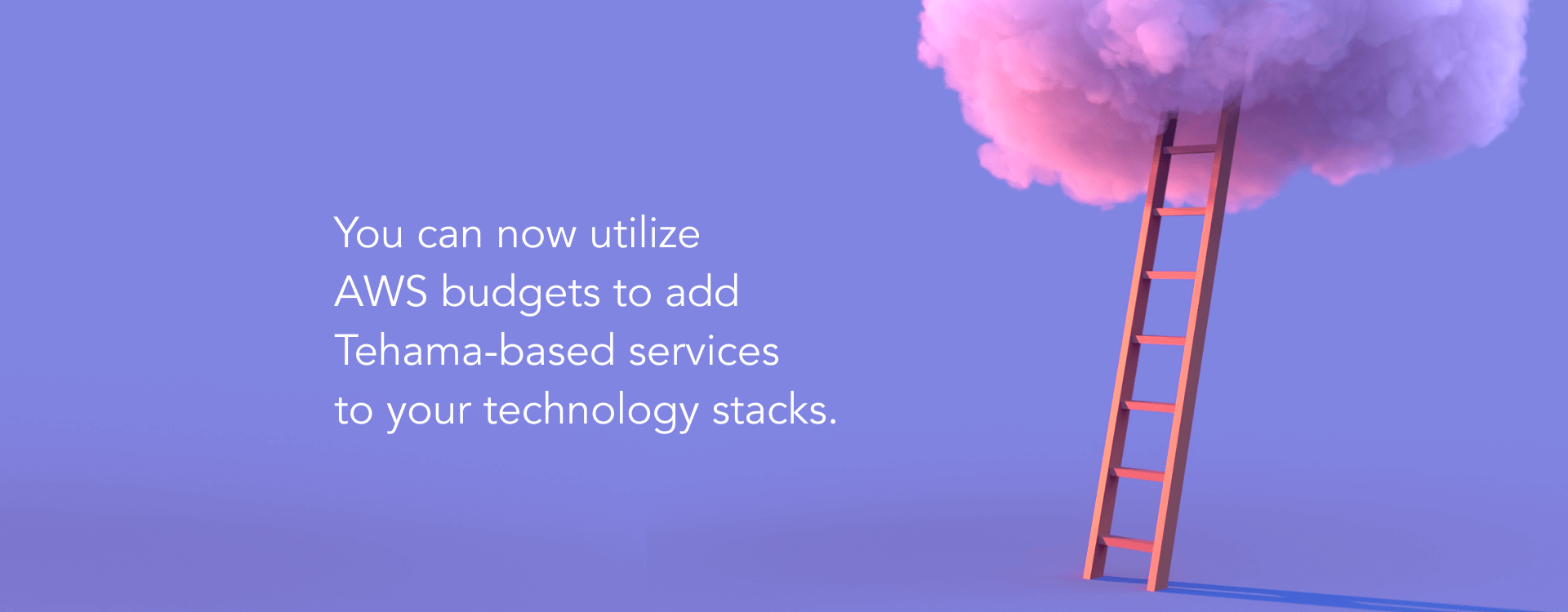
If your organization is already procuring technology solutions and services through the AWS, you can now utilize budgets allocated for this purpose to add Tehama-based services to their technology stacks. This helps you to further maximize the value that your relationship with AWS brings to your business, while at the same time accelerating your move to the cloud.
Secure Hybrid Work Environments.
Tehama is built to enable fully secure information-sharing and digital collaboration within the organization with file encryption, forensic analysis and auditing, for example. With ultra-low latency, high-performance virtual Enclaves and desktops featuring SOC 2 Type II end-user compute environments (either Windows or Linux), Tehama can help hybrid workforces get up and running securely and compliantly within their AWS environments.
Increase IT Efficiency With Workplace Automation.
Tehama is built to enable fully secure information-sharing and digital collaboration within the organization with file encryption, forensic analysis and auditing, for example. With ultra-low latency, high-performance virtual Enclaves and desktops featuring SOC 2 Type II end-user compute environments (either Windows or Linux), Tehama can help hybrid workforces get up and running securely and compliantly within their AWS environments.
Save Money, Align Costs and Achieve Scale.
Because automation and provisioning of AWS resources are still done manually, or must be pre-allocated or paid up front to enable “on-demand” configurations, over-provisioning and under-utilization are all too common. When businesses combine the Tehama Platform with their AWS deployments, they gain the flexibility to scale their Tehama footprint wherever it provides the best performance.
Tehama improves scalability by eliminating the wasteful spending associated with “on-demand” configurations common in the deployment of cloud-based applications and infrastructure and automates the allocation of IT resources so they grow and contract as your organization’s needs change.
Prepare for the Unexpected.
The combination of the Tehama Platform and AWS enables customers to reduce (or eliminate) costs and delays associated with designing for and preparing POCs, contractor access, pandemics, natural disasters, and M&A activities. As a result, organizations are able to continue to meet the needs of internal and external stakeholders in the face of business disruption.
Connect with Tehama today to learn how to unlock the value of your AWS investments and expedite your move to the cloud. For more information on the alliance between Tehama and AWS, visit http://tehama.io/tehama-plus-aws/.

Read More
Beyond the Compliance Calendar: How the Enclave Model Transforms Subcontractor Risk, AI Adoption, and Competitive Positioning
Your Enclave, Your Keys: The Self-Custody Model That Removes Vendor Trust from the Equation